
A Cough That Spreads Fast Is Easier to Prevent Than to Treat
Canine influenza passes quickly between dogs at boarding facilities, groomers, parks, and training classes. At Pleasant Valley Pet Clinic in Placerville, CA, we offer the canine flu vaccine to help lower your dog’s chances of catching this contagious respiratory virus and to help limit its spread to other dogs.
Request an AppointmentWhat Is Canine Influenza?
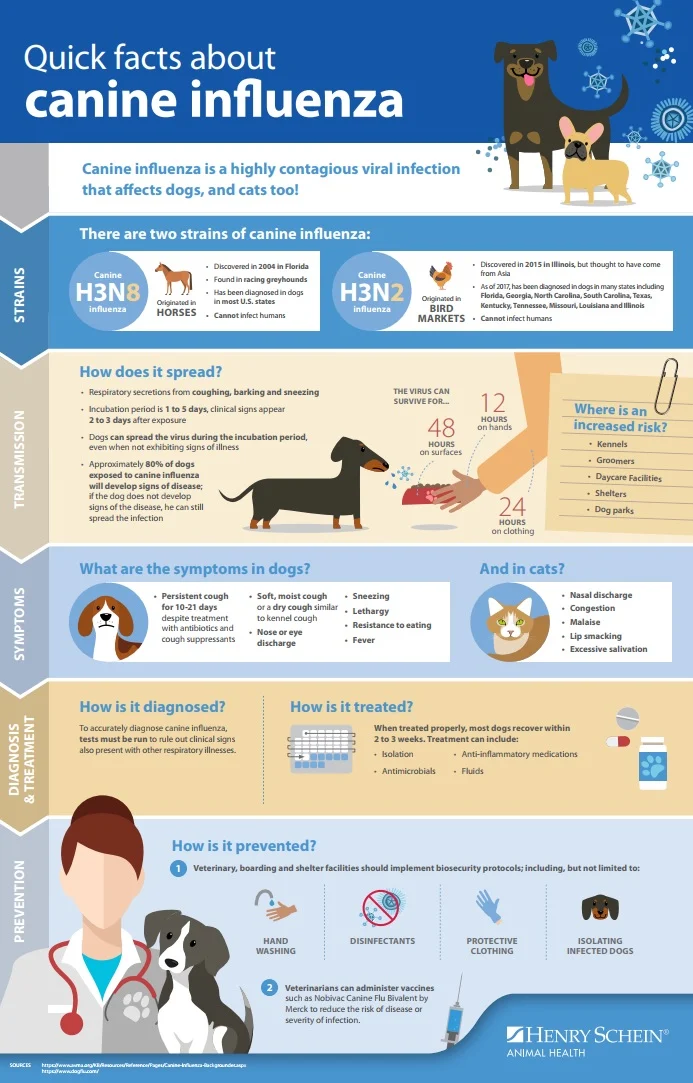
Canine influenza, often called dog flu, is a highly contagious respiratory illness caused by influenza viruses that affect dogs. It spreads through coughing, sneezing, and barking, and also on shared bowls, toys, leashes, and even our hands and clothing. Because most dogs have never been exposed, nearly any dog that meets the virus can become sick.
Signs of canine flu can look a lot like kennel cough, which is why it is easy to miss at first. Watch for:
- A persistent cough that may be moist or dry
- Nasal discharge and sneezing
- Fever
- Low energy or lethargy
- Reduced appetite
- Watery or red eyes
Some dogs have mild illness, while others can develop pneumonia and need more intensive care. Click the infographic above to open the full-size version and see the key facts about how the virus spreads and how it can be prevented.
Which Dogs Should Be Vaccinated?
The canine flu vaccine is a lifestyle-based vaccine, which means we recommend it based on your dog’s exposure risk. Dogs that benefit most include:
- Dogs that are boarded, go to daycare, or visit groomers
- Dogs that attend training classes, dog parks, or group walks
- Dogs that travel, compete, or take part in events with other dogs
- Puppies, senior dogs, and dogs with health conditions that make respiratory illness more serious
- Dogs that live with other dogs that are often out and about
Not sure where your dog falls? Our team can review your dog’s routine and walk you through a canine disease risk assessment so you can decide what makes sense for your family.
What to Expect at the Vaccine Visit
Dogs getting the flu vaccine for the first time typically need an initial dose followed by a booster a few weeks later. After that, a yearly booster helps keep protection current. Your veterinarian will check your dog’s overall health, review your dog’s other vaccinations, and let you know the best timing. If your dog has any boarding or training dates coming up, schedule early so the series is finished before exposure.
Call us at (530) 644-2424 with any questions about timing or whether the vaccine is a fit for your dog.
Canine Flu Vaccine Questions Answered
Is canine influenza the same as kennel cough?
No, but they look alike. Kennel cough is a general term for several causes of coughing in dogs, while canine influenza is caused by specific flu viruses. Because the signs overlap, a veterinary exam is the best way to tell what your dog has.
Can my dog catch the flu from a human?
Canine influenza is a dog-specific illness and is not the same as the seasonal flu that people catch. Dogs spread it among themselves, and people can carry the virus on hands, clothing, and objects between dogs.
How many doses does my dog need?
Dogs vaccinated for the first time usually receive two doses a few weeks apart, then a yearly booster. Your veterinarian will set a schedule that fits your dog’s age, health, and upcoming plans.
Are there side effects from the canine flu vaccine?
Most dogs handle the vaccine well. Some may be a little tired or sore at the injection site for a day or so. Call us if you notice swelling, vomiting, facial puffiness, or anything else that worries you after a visit.
Does the vaccine guarantee my dog will not get sick?
No vaccine offers complete protection, but the canine flu vaccine can reduce the chance of infection and often lessens how severe the illness is if a vaccinated dog does get sick. It also helps limit spread to other dogs.
Do boarding and grooming facilities require it?
Many boarding, daycare, and training facilities now ask for proof of the canine flu vaccine. Check with your facility, and let us know the dates so we can make sure your dog’s series is complete in time.
What should I do if I think my dog has the flu?
Call us right away at (530) 644-2424 and keep your dog away from other dogs. Early care helps manage symptoms and lowers the chance of complications such as pneumonia. Please call ahead so we can plan for your arrival and help protect other patients.
Get Your Dog Covered Before Their Next Outing
Whether you have a boarding stay, a training class, or just a social pup, our team is happy to help you decide on the right protection. Call (530) 644-2424 or request a visit online.